
Paper Delivery Boy
Supercent, Inc.Arcade
4.41.07K Reviews
- Version
- 1.47.0
- Installs
- 10.00M
- Age Rating
- Everyone
Screenshots
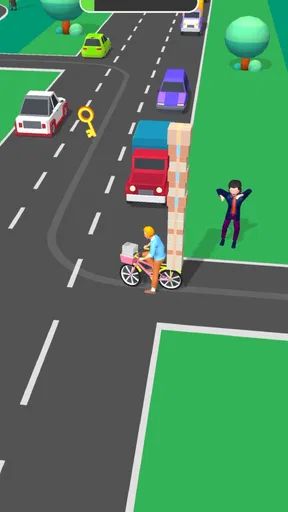
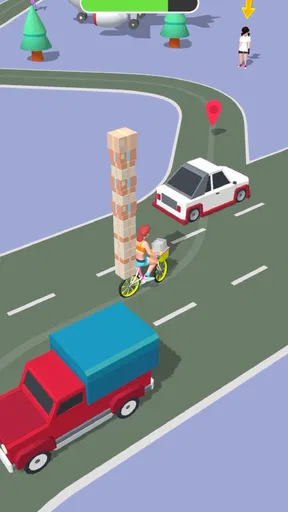
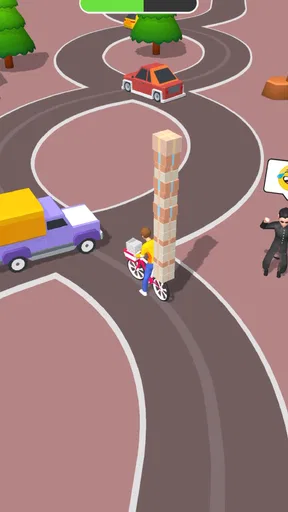
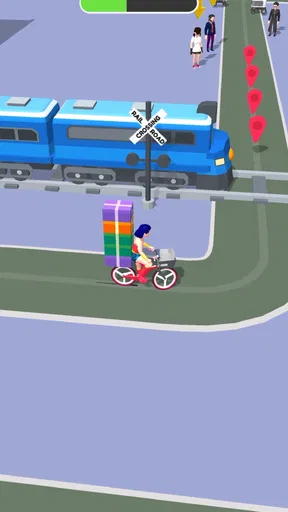
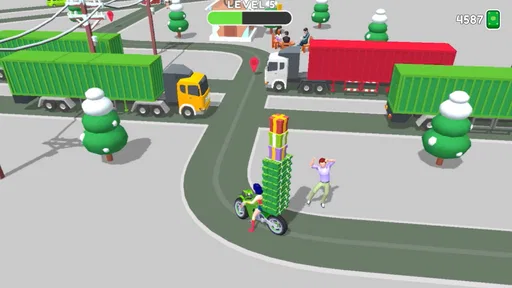
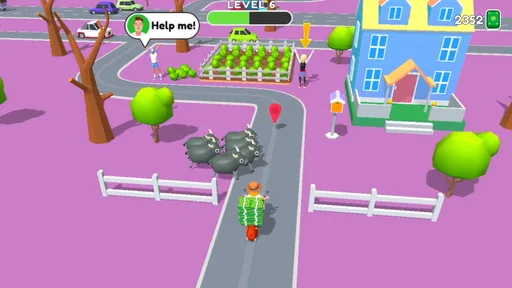
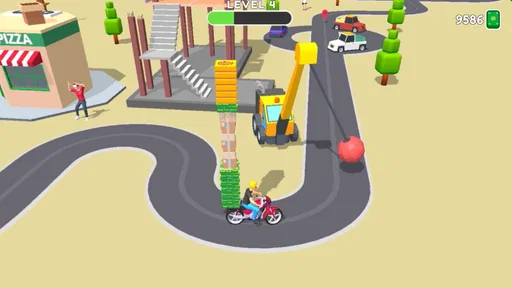
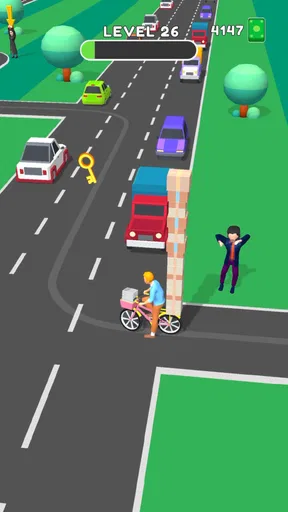
Our Review of Paper Delivery Boy
 Analysis by Appyee
I approached Paper Delivery Boy expecting a quick arcade game, and that is exactly where it fits best: short sessions built around riding a bicycle, delivering items around the neighborhood, and reacting before hazards ruin the run. It is easy to understand within moments, but the simple premise does not mean every attempt feels effortless. The real appeal comes from learning how to read the route, control your movement without overcorrecting, and decide when a safe delivery matters more than a risky shortcut.
Developed by Supercent, Inc., this free game is aimed at players who want something immediately playable rather than a long story or a complicated progression system. It belongs to the arcade category, carries an Everyone age rating, and has reached over ten million installs with a 4.4 average from roughly 225 thousand ratings. Those figures suggest broad appeal, but they do not tell you whether its rhythm suits you. After spending time with it, I would describe it as a casual distraction with enough tension to keep repeated attempts interesting, especially when I only have a few minutes.
Getting started without unnecessary frustration
The first thing I would check is whether your phone can run it comfortably. The game supports Android 6.0 and later, so compatibility is fairly broad, but an older device can still behave differently from a newer one. If the opening screen takes an unusually long time to respond, the problem may be the phone rather than the game itself. Closing other demanding apps, restarting the device, and making sure there is adequate free storage are sensible first steps before judging the experience.
Installation is free, which makes trying it easy, although optional purchases range from $0.99 to $10.99 per item. I recommend beginning without spending anything. Play enough to decide whether the delivery loop itself is enjoyable before considering any purchase. A casual arcade game should not require financial commitment to answer that basic question, and the free starting point gives you a useful chance to understand its pacing.
The current version is 1.45.0, and keeping the app updated is a practical troubleshooting step when something behaves strangely. If an update has just been installed, I would close and reopen the game rather than immediately assuming a control issue is permanent. On Android, a full device restart can also clear temporary problems. I would avoid repeatedly reinstalling as a first response, because that can remove local progress if the game does not restore it automatically.
One common point of confusion in games like this is mistaking a missed delivery for a technical failure. The rider can be moving, the screen can be responding, and the attempt can still end because the route was handled poorly. I found it more useful to separate three questions: did the game accept my input, did the rider move as intended, and did I choose a safe path? That simple distinction prevents a lot of unnecessary troubleshooting.
Learning the road instead of fighting the controls
My best early adjustment was to use smaller movements than I initially wanted. When a hazard appears, a large correction may feel reassuring, but it can send the bicycle too far in the opposite direction. Gentle steering gives you more room to react again. I also found it helpful to look slightly ahead of the rider rather than staring only at the immediate obstacle. Arcade routes often punish late reactions, so anticipation is more valuable than frantic movement.
Another useful habit is to treat each attempt as a route-reading exercise. Do not focus only on whether the latest delivery succeeded. Notice where the road narrows, where danger tends to appear, and which parts make you rush. If you repeatedly fail at the same kind of section, slow down mentally before reaching it. The game becomes less about random reflexes and more about building a small internal map of its challenges.
That approach also answers an important question for new players: is the game suitable for children? The Everyone rating makes it broadly accessible, and the premise is light rather than frightening or mature. Still, younger players may become frustrated if they expect every ride to be easy. I would present it as a simple reflex game with occasional failure, not as a completely relaxed activity. Short turns and clear goals make it a reasonable choice for casual play, provided the player is comfortable trying again.
Recovering when a run goes wrong
When a delivery fails, I would resist immediately blaming the controls. First, check whether the device was registering touch consistently in other apps. If the whole phone feels sluggish, close background apps and restart it. If only this game is affected, reopen it and try again before changing multiple settings at once. Making one adjustment at a time helps identify whether the issue was temporary or connected to the way the run was played.
If the game does not open properly, basic steps are still the safest: confirm that the device meets the minimum operating-system requirement, check for a pending update, restart the phone, and ensure the installation completed normally. I would not download unofficial versions or modified packages to solve a loading problem. Besides creating security risks, they can make it impossible to tell whether the original game or the altered file caused the trouble.
Progress is another reason to be cautious with reinstalling. Before removing the app, I would look for any in-game account or restore option that the game itself presents. I would not assume that deleting and reinstalling will preserve a run automatically. If a player has invested time, the safer workflow is to try closing, restarting, and updating first. That is less dramatic, but it avoids turning a small error into a larger one.
There is also a practical recovery technique during play: after a failed attempt, change only one behavior. If you were steering too aggressively, try softer corrections. If you were taking every opening, choose the safer line. If you were reacting late, watch farther ahead. Changing everything at once makes it difficult to learn what actually helped. I found that treating failure as feedback made repeated runs less irritating and more rewarding.
When the phone or connection is the real problem
Not every interruption comes from the game. A phone with very little free space may struggle with new installations or updates. A device running hot can become less responsive, especially if other demanding apps are open. Battery-saving modes and background activity limits can also affect how smoothly a game feels, although the exact result depends on the phone. Before reporting a gameplay issue, I would test after a restart with unnecessary apps closed.
If the store page or update process is stuck, check the device’s general connection and app-store behavior rather than assuming the game itself is broken. Try another stable network if one is available, and avoid repeatedly tapping install or update. Multiple attempts can create more confusion without fixing the original interruption. Once the game is installed, a brief offline test can help you understand whether the problem is with access to the app or with the ride itself, but I would not assume every feature behaves identically without a connection.
Touchscreen problems deserve a separate check. A dirty screen, a thick protector, or an awkward grip can make steering seem unreliable. I found that holding the phone securely and keeping the active finger away from the edge made short corrections easier. If touch input fails in unrelated apps too, the game is probably not the cause. That is a useful boundary: troubleshoot the device when the same symptom appears everywhere.
Performance expectations should also be realistic. This is a compact arcade experience, not a substitute for a large racing game with extensive options. If you want deep vehicle tuning, long competitive events, or detailed simulation, another genre will serve you better. On the other hand, if a full racing game feels like too much commitment, the bicycle delivery setup is more approachable. Its strength is the quick decision, not a complex driving model.
How the delivery loop works as a daily habit
I can easily imagine using it during a bus wait, a short break, or the few minutes before an appointment. A typical session does not need a carefully planned evening. I would open it, make several attempts, and stop once I either improved a troublesome section or felt my attention dropping. That makes it more convenient than a story-driven game that expects you to remember a plot or complete a long mission.
The best way to play is with a narrow goal. Instead of chasing an undefined perfect run, focus on surviving a particular route section, improving your timing, or completing deliveries without taking unnecessary risks. This turns repetition into practice. It also reduces the disappointment that comes from treating every failed attempt as wasted time.
There is a trade-off here. The straightforward format is friendly to newcomers, but players who need a strong sense of long-term progression may find it light. I would choose it over a traditional racing game when I want immediate action and minimal setup. I would choose a more substantial arcade or racing alternative when I want varied modes, deeper control, or a reason to play for a much longer session.
The purchase system is worth keeping in mind during that comparison. Because the game is free to start but includes optional items, I would pay attention to whether a purchase genuinely improves your enjoyment rather than making a rushed decision after a frustrating failure. A difficult run can create the urge to buy something immediately, but waiting until you understand the normal gameplay gives you a clearer view of its value.
Who will enjoy it, and who should skip it
This is a good match for someone who likes uncomplicated arcade challenges, quick retries, and the satisfaction of improving through repetition. It also works for players who enjoy playful everyday settings more than competitive racing themes. The paper-and-package delivery idea gives the action a distinct identity, even though the underlying pleasure still comes from timing, movement, and avoiding danger.
I would recommend caution for anyone who dislikes repeated failure or expects a calm delivery simulator. The premise sounds gentle, but the obstacles turn each ride into a reflex challenge. Players looking for a social experience, a rich narrative, or detailed customization should also look elsewhere. The game is at its strongest when you accept its compact loop instead of asking it to provide the depth of a different type of title.
It is also not the best choice if your phone has persistent touch or performance problems. A game built around quick reactions cannot feel fair when input arrives late. In that situation, solving the device issue comes first. If other games respond normally and only this one feels awkward, then the game’s control style may simply not suit you, and no amount of practice will make it your ideal arcade pick.
My practical verdict after playing
The main reason to try Paper Delivery Boy is its low commitment. It is free, easy to understand, suitable for an Everyone audience, and focused enough to provide a quick burst of play. Supercent, Inc. has built the experience around a familiar task made tense by movement and hazards, and I think that contrast gives it more personality than a completely abstract reflex game.
My advice is to install it with modest expectations, test the controls in a quiet moment, and give yourself a few attempts before deciding. Use light steering, watch the route ahead, and treat repeated failures as information rather than proof that the app is malfunctioning. If loading, touch response, or performance is inconsistent, work through the device checks before reinstalling or spending money.
For me, it is most successful as a pocket-sized arcade game: something I can pick up quickly, play in short bursts, and put down without losing a complicated thread. The 4.4 average and broad install base show that many players have found that formula appealing, while the nearly one thousand written reviews offer additional user discussion around it. I would recommend it to casual players who enjoy reflex-based delivery runs, but I would steer serious racing fans and simulation enthusiasts toward a deeper alternative.
In the end, this is a game to choose for its immediate rhythm, not for a large feature list. If the idea of balancing deliveries with quick reactions sounds fun, the free entry point makes it easy to judge for yourself. If you want elaborate progression or a relaxed ride with no pressure, skip it. My final view is positive but specific: Paper Delivery Boy is a handy arcade diversion when you want a small challenge, provided your expectations match its focused, repeat-and-improve design.
Privacy and Permissions
See what permissions an app requests and how it handles your data.
- Wi-Fi connection information
- view Wi-Fi connections
- Other
- view network connections, full network access, run at startup, control vibration, prevent device from sleeping, Google Play license check
Verdict
Strengths of Paper Delivery Boy
- Simple controls make the game easy to pick up and play.
- Short levels are convenient for quick gaming sessions.
- Bright visuals give the game a cheerful, accessible style.
- Increasing challenges help keep the gameplay engaging.
- Offline play makes it suitable for gaming without a connection.
Limitations of Paper Delivery Boy
- Gameplay can become repetitive after extended play.
- Some levels may feel too easy for experienced players.
- Limited variety may reduce long-term replay value.
- Progress can feel slow without frequent new challenges.
- Ads may interrupt play, depending on the version and device.
Other Releases by Supercent, Inc.
View All
Snake Clash!
Arcade4.5

Pizza Ready!
Simulation4.4

Prison Life: Idle Game
Role Playing4.0

Dessert Factory Idle
Arcade4.7
Similar Picks in This Category
View All
Subway Surfers
SYBO Games4.6

Stickman Party 234 MiniGames
PlayMax Game Studio4.6

Subway Princess Runner
Ivy4.4

Temple Run
Imangi Studios4.2

Zombie Tsunami
Mobigame SAS4.6

Stack Ball - Crash Platforms
CASUAL AZUR GAMES4.5
Frequently Asked Questions
What is Paper Delivery Boy, and how is the gameplay structured?
Paper Delivery Boy is a casual delivery game in which you take on the role of a newspaper carrier. The main objective is to ride through neighborhood streets, deliver papers to the correct homes, and avoid obstacles along the route. Gameplay is generally easy to understand, but later stages may require better timing, accuracy, and route awareness as traffic, hazards, and delivery targets become more challenging.
Is Paper Delivery Boy suitable for children and casual players?
The game is designed to be accessible to a broad audience, including children and players who prefer short, uncomplicated gaming sessions. Its controls and objectives are usually straightforward, making it easy to start without a long tutorial. However, parents should still review the age rating and advertising content shown on the store page, because suitability can vary depending on the device version and the game’s current monetization features.
Does Paper Delivery Boy require an internet connection to play?
Paper Delivery Boy may support offline play for its basic delivery levels, which is convenient when traveling or when a stable connection is unavailable. Nevertheless, certain features—such as advertisements, rewards, updates, leaderboards, or in-app purchases—can require internet access. Before downloading, it is worth checking the official Google Play or App Store listing, since offline functionality may differ between Android and iOS versions.
Are there advertisements or in-app purchases in Paper Delivery Boy?
Like many free-to-download mobile games, Paper Delivery Boy may include advertising and optional in-app purchases. Ads can appear between levels or when claiming bonus rewards, while purchases may provide cosmetic items, extra currency, or an option to reduce interruptions. The game can generally be enjoyed without spending money, but users should check the store description and purchase settings before allowing children to play.
What should I check before downloading Paper Delivery Boy?
Before installing Paper Delivery Boy, check that your device meets the required operating-system version and has enough free storage for the download and future updates. You should also review the developer information, privacy policy, permissions, age rating, recent user reviews, and whether the game is available in your region. Confirming these details helps avoid compatibility problems and gives you a clearer idea of advertising and data practices.
Play our best games!


